Hon 102

Connect: Evidence & Argument

In this second course in the Honors sequence, you will enter into the community and practice of active scholarship within various topic areas of instructor expertise. Working within diverse content areas in different sections of the course, each drawing from diverse Global Perspectives, you will develop core skills in writing, editing, and revising; finding and synthesizing scholarly sources, and constructing scholarly arguments.

Course Learning Outcomes:
Students further develop skills established in 101 and begin to build their scholarship and research toolkit; topics vary.

General Education Requirement (GER):
Satisfies Cultural Diversity & International Perspectives; Writing Intensive GER.

Spring 2027 HON 102 Course Offerings

*Courses may be modified or cancelled based on enrollment, staffing, and other factors.

MWF- Courses meet Monday, Wednesday, and Friday

M/W- Courses meet Monday and Wednesday

T/TH- Courses meet Tuesday and Thursday

The painting "Nocturne in Gold and Black," c. 1875 by James McNeill Whistler

Aesthetic Essaying

James Brophy

We feel an aesthetic but how do we put it into words? A voice, a face, a poem, a room, a political image: these carry auras, they give vibes: but how do we describe and interpret a vibe? What does our reaction reveal to us about ourselves and the cultures that shape us? We will read aesthetic theory and criticism and write about aesthetic objects that are meaningful to us. Finally, we’ll consider how aesthetic experiece does or does not ‘travel’ across cultures and times, and how one develops new tastes or new aesthetic “literacies.”

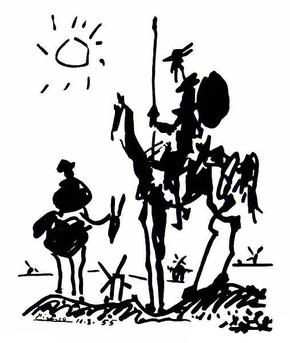
Picasso sketch of Don Quixote and Sancho Panza.

Road Narratives Around the World

Jimmy Fazzino

This HON 102 will focus on road narratives around the world and through time. We’ll explore how stories of travel, journey, and transformation have shaped cultures and identities across the globe. Students will dive into a variety of road narratives from diverse traditions, sharpening their ability to read, analyze, and synthesize scholarly materials. Along the way, they’ll develop essential skills in constructing arguments, leading peer discussions, and refining their writing through feedback and revision. This course satisfies both the Global Perspectives and Writing Intensive general education requirements, encouraging students to engage with global cultures while honing their writing craft. Through this journey, students will not only deepen their understanding of road narratives but also reflect on their own unique perspectives in relation to the scholarly world.

Dutch Ships in a Calm Sea

Visual Thinking

Michael Grillo

In an era dominated by images, typically photographs and videos, our culture tends still to think of images as illustrating ideas developed first in verbal language. In that biased model, images communicate out established concepts as accurately as possible, and also as effectively as possible through persuasive aesthetics. While aesthetic choices give us insights in how visual language serves communications in their native societies, more importantly, these culturally tuned visualizations prompt us to also consider how they provide a crucial mechanism for thinking. One only has to look to fields today that use visual language to think through their ideas, such as chemistry visualizing molecular structures, biology working through genomes visually, and epidemiologists thinking through pandemics through mappings. Visual Thinking will look historically, to consider the Palaeolithic drawings as zoological studies, Neolithic and early settlements’ earth works as studies in astronomy, Classical world works as philosophical studies, religious institutions’ material creations as theological examinations, Renaissance and Baroque works as scientific learning, and the role of diverse imaging technologies as core to numerous fields’ conceptual developments. As we examine visual works from diverse eras, we consider how they work as complements to verbal and mathematical expression, typically providing unique avenues of thinking impossible in these other linguistic systems.

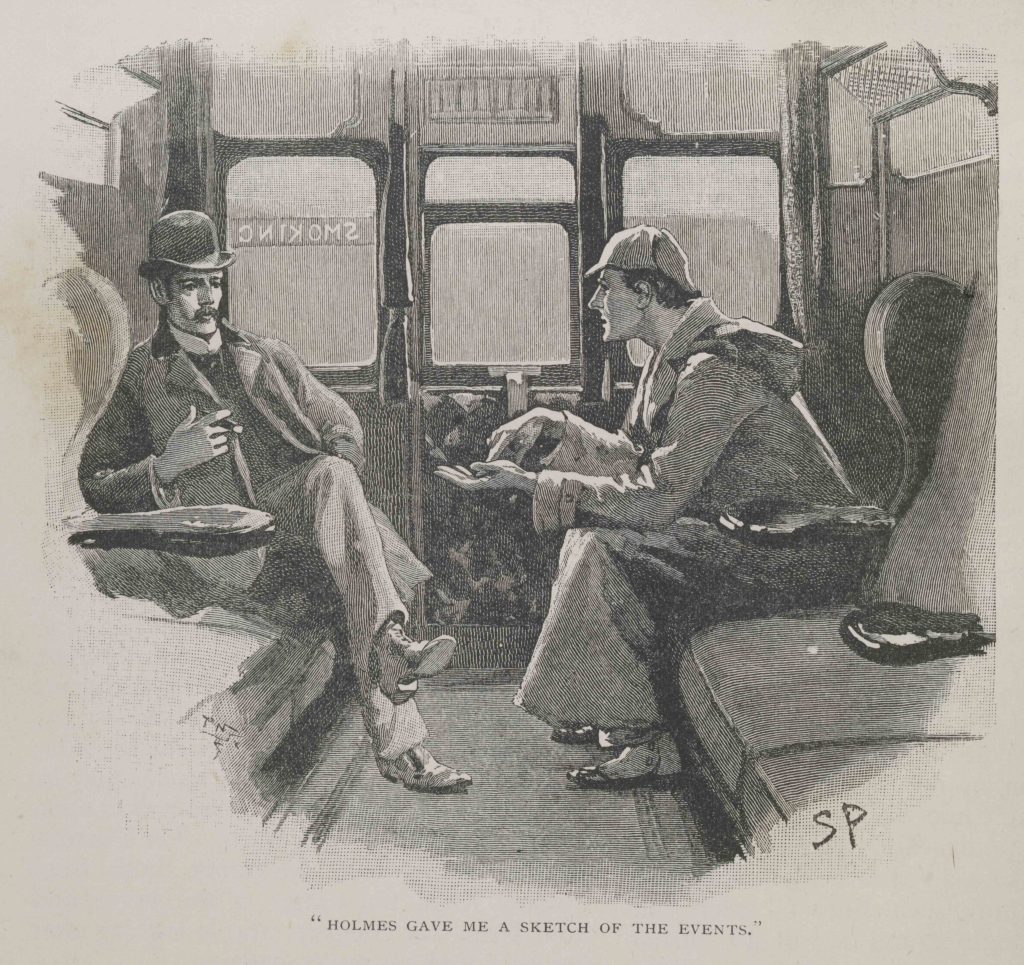
A photo of two detectives on a train

The Modern World through Detective Fiction

Tobias Hrynick

In this course we will use the detective story as a window onto human pasts from the mid-nineteenth century to the present day. Everything written encodes the assumptions, morality, and interests of its own time. Mystery stories are not always taken seriously as literature (one of the assumptions of our times, and one worth questioning). But detective stories offer unique advantages. Even more explicitly than other genres, they explore and challenge basic social values: Who can we trust? Who is at risk? And who deserves to be punished?

Pilgrims walking down a road through fields

Walking the Walk: Global Pilgrimages

Mimi Killinger

In this HON 102 course, we will study pilgrimages to remarkable places such as the Dolpo region of Nepal; Canterbury, England; the Spanish Cathedral of Santiago de Compostela; Mecca; and Mt. Katahdin. Through maps, poetry, literature, art and artifacts, we will join a variety of pilgrims on fascinating quests, both historical and contemporary. We will furthermore embark upon our own journey of discovery, exploring notions of global adventure, spiritual growth, personal sacrifice, displacement, camaraderie and more.

A man inserting a flower into a gun pointed at him.

Moral Courage in Perilous Times

Ryan LaRochelle

We will explore how scholars conceptualize the idea of moral courage and how it relates to one’s individual character. But perhaps more importantly, we will analyze how individuals exercise moral courage in the face of uncertainty, chaos, crisis, and even violence. In doing so, the course will hopefully provide all of us with a deeper understanding of duties and obligations as engaged citizens and shape our own capacity to act with courage in times of crisis.

Curia of Pompey, Rome Italy. On March 15, 44 BC, the Senate met there and Caesar was assassinated. Photo by Julie Lisnet May 2026.

Shakespeare from Page to Stage: Julius Caesar

Julie Lisnet

Step into the political intrigue and dramatic power of Shakespeare’s Julius Caesar. In this hands-on Honors course, you won’t just read a masterpiece—you’ll bring it to life. Explore Elizabethan politics, investigate historical documents, and analyze bold modern adaptations to discover why this iconic tragedy still echoes through world culture today. No acting experience? No problem. Through collaborative scene work, lively discussions, and a culminating public showcase, you’ll sharpen essential academic skills in writing, research, and argument construction while taking Shakespeare from the page directly to the stage.

World War 1 Battle Scene

Testament of Youth: Literature of the First World War

Matt Pifer
This particular HON 102 class focuses on the varied literature written in English about the First World War. This literature includes memoirs, stories, and poems written at the time of the war as well as reflections on the War’s significance. These works offer a unique perspective on the human experiences that defined one of history’s most devastating conflicts. Supporting this reading, you will explore fascinating World War I digital archives to deepen your engagement with and understanding of these texts, uncovering personal accounts, reactions to the war, images, and audio–the cultural apparatus that informs today’s understanding.

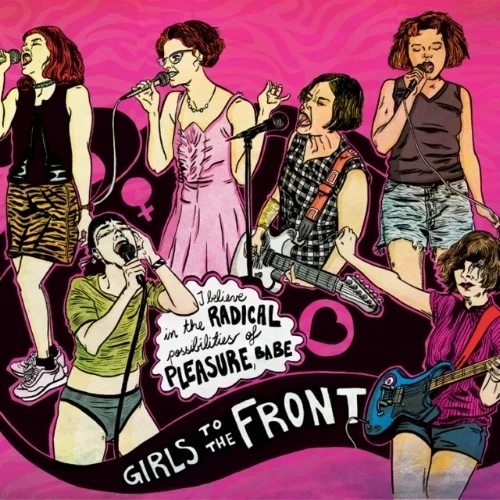
A photo of various women singing and playing instruments

Making a Scene

Clinton Spaulding

This course will consider geographically centered artistic responses to particular socio geopolitical phenomena in the late 19th through early 21st centuries. Specific scenes to be explored include the French Symbolists, the San Francisco Bay music scene of the 1960s, NYC Hip Hop, and the Riot Grrrl scene of the Pacific Northwest among other international, geographically centered artistic movements of resistance.

Contraband, Prohibition, and the Canadian-US Border

Exploring the Informal Markets of Global Capitalism

Stefano Tijerina

In this version of HON 102: We will be able to develop foundational scholarship skills through the analysis of the informal markets that have surfaced from the social, economic, political, and environmental dynamics of this current era of globalization. We will explore the other side of the coin of global capitalism, the marginal and parallel markets that are intertwined with the structural operation of a globalized market system. Initial primary and secondary source evidence gathered by the instructor will be complemented by research carried by the student throughout the semester with the objective of expanding the understanding of the local and global dynamics of informality. This collective research exploration will allow us to engage with scholarly sources, identifying their strategic use for the construction of effective and well supported written arguments.

Mosaic of Heracles cleaning the Augean Stables

Myths, Legends, and Folktales

Josh Walton

This class will focus on using ancient myth and legends alongside more contemporary folk literature and fairy tales to better understand human nature and modern society. We will learn about other cultures by looking at stories that they found significant, and use these stories to better understand how humanity has used stories to construct, perpetuate, and reproduce social values. In doing so we will also examine how stories reflect and form social norms and standards. We will then use this framework to examine our own society and how we create use stories and examine what values and norms we are reinforcing and reproducing through those stories.